This page grows as the program progresses; deliverables are added as each phase is completed.
Explore our experience applying for, receiving, and executing The Regional Catastrophic Preparedness Grant Program (RCPGP). Our goal is to provide emergency managers and public safety professionals with practical insight into the application process, including:
- Our planning timeline
- Project development process
- Partnership coordination
- Documents
- Templates
- Lessons learned
- Tips for future applicants
By sharing our approach, we hope to make the grant application process more transparent and share our best practices executing the Regional Catastrophic Preparedness Grant Program in our region.
What is the Regional Catastrophic Preparedness Grant Program
The Regional Catastrophic Preparedness Grant Program (RCPGP) is a competitive grant program administered by the Federal Emergency Management Agency (FEMA) that helps state and local governments strengthen regional preparedness for catastrophic incidents. Rather than funding response operations, the program focuses on planning, coordination, capability development, and long-term resilience through collaboration among jurisdictions and partner organizations. The goal is to improve a region's ability to prepare for, respond to, and recover from disasters that exceed the capabilities of a single jurisdiction.
The RCPGP is designed to help regions:
- Strengthen regional partnerships and coordination
- Address known preparedness capability gaps
- Improve catastrophic incident planning
- Build community resilience
- Develop innovative, regional solutions to complex hazards
- Reduce long-term vulnerabilities, particularly in underserved and disadvantaged communities
Projects are expected to support whole-community preparedness by bringing together emergency management, public safety, healthcare, nonprofit organizations, private sector partners, and other stakeholders.
The Application Process
If you would like to learn more about the grant application process, please reach out to Justin Cox (JCox@nctcog.org) for more information.
Thinking through the Phases
Through the Regional Catastrophic Preparedness Grant Program, a three-year period was provided to meet established milestones and achieve the goal of enhancing disaster preparedness and community resilience. The three years were broken into three phases.
Phase 1: Raise Awareness
The goal of Phase 1 is to increase public awareness while providing residents with the knowledge and tools needed for mitigation, response, and recovery.
Regional Planning Partner Group
- Made up of representatives from the 13 participating jurisdictions that signed letters of support, along with a Community Preparedness Programs Working Group and a Public Education Working Group.
- These groups allow partners to collaborate on activities throughout each phase while increasing information sharing among emergency managers, community leaders, and voluntary organizations.
- Support Letter Template
One on Ones
- Hosted one-on-one meetings with each of the 13 jurisdictions to better understand local needs
- Topics discussed:
- Events Hosted
- Community Organizations
- Barriers
- Trainings Hosted
- Community Resilience Survey
- Jurisdiction Demographics
- Ideas on Resiliency Items (Website, Kits, Survey, Project)
- Common themes emerged from discussions:
- Jurisdictions expressed a desire to strengthen partnerships with local organizations such as Lions Clubs, Rotary Clubs, Homeowners Associations (HOAs), Independent School Districts (ISDs), and Community Emergency Response Teams (CERT).
- There was also a recognized need to build stronger relationships with non-English-speaking communities and community centers.
- Jurisdictions identified several preparedness challenges, including limited public awareness of emergency management and the need to tailor outreach for the differing needs of rural and urban communities.
- Common hazards identified across the region included severe weather, flooding, cybersecurity threats, hazardous material incidents, and active threat events.
Outreach Materials
- Based on these discussions, we developed a wide range of educational materials, including brochures, rack cards, and flyers. These materials are currently being distributed during community outreach events throughout the region.
- Click here to view and download
Resilience Kits
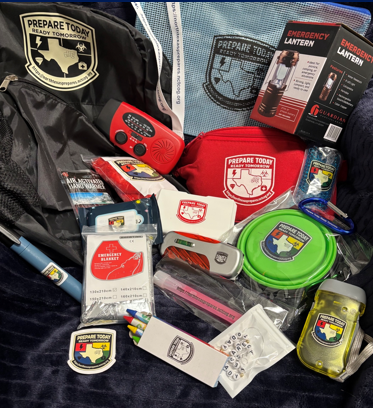
- To encourage hands-on preparedness, we researched the basic items households may need in an emergency and assembled them into resiliency kit backpacks.
- Each kit includes: flashlight, first aid kit, emergency blanket, poncho, hand warmers, a hot/cold pack, glow stick, whistle with lanyard, hygiene kit, sanitizer wipes, a document bag, and a carabiner.
- These kits are distributed at community outreach events throughout the region, giving residents a starting point for building their own emergency supplies.
Phase 2 focuses on strengthening emergency response plans by enhancing local preparedness efforts and ensuring community needs are reflected in emergency planning.
Community Resilience Survey
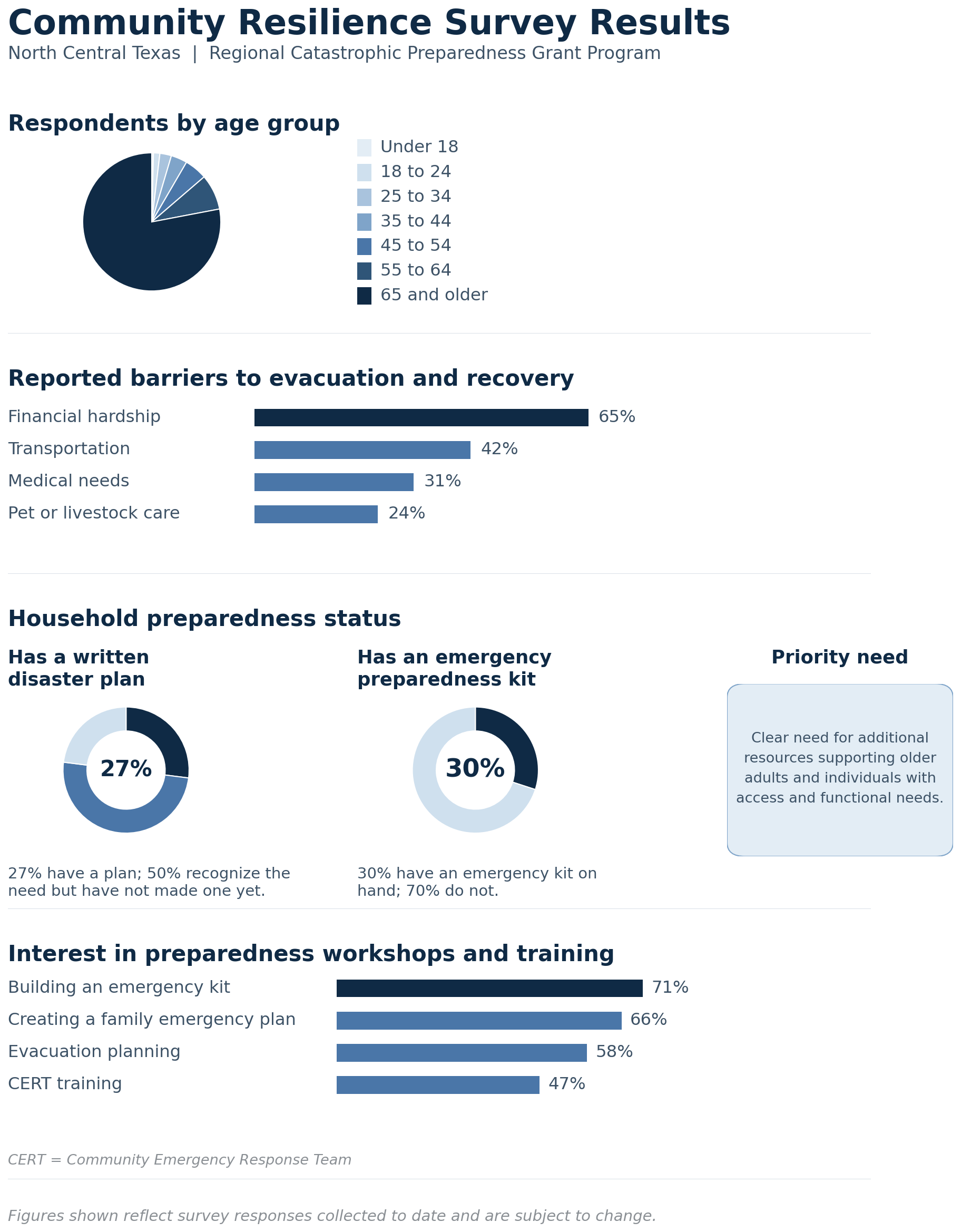
Created and administered a Community Resilience Survey designed to better understand the resources and support residents may need before, during, and after emergencies. Survey responses will help shape future planning, training, and outreach efforts across North Central Texas.
- Feedback collected from jurisdictions across the region has informed multiple project deliverables, including future workshops and the development of a regional emergency preparedness website.
- The majority of respondents are age 65 and older.
- Financial hardship is the most commonly reported barrier to evacuation and disaster recovery.
- Many residents recognize the importance of having a disaster plan but have not yet created one.
- A significant number of respondents do not have an emergency kit.
- There is a clear need for additional resources supporting older adults and individuals with access and functional needs.
- Residents expressed strong interest in preparedness workshops and training opportunities, including:
- How to build an emergency kit
- How to create a family emergency plan
- Evacuation planning
- Community Emergency Response Team (CERT) training
NorthTexasPrepares
- As a part of our grant, one of our main deliverables was to create a website that is a trusted hub for emergency preparedness and community resilience across North Central Texas. This website is intended for residents, business owners, educators and first responders. We will have resources on a multitude of topics including homeowners' insurance, insurance fraud after a disaster, cyber safety, access and functional needs, and pet and livestock safety just to name a few.
Regional Tabletop Exercise
- Conduct a regional tabletop exercise focused on disaster-prone areas and the unique needs of vulnerable populations.
- Topics include:
- Animal services and pet sheltering integration
- Public information and warning systems
- Hazardous materials incidents, including regional plume modeling and shelter-in-place versus evacuation decision-making
- Our goal is to conduct the tabletop exercise during the October–December 2026 timeframe.
- The project culminates in a Community Resilience Conference that will bring together community leaders, emergency managers, partner organizations, and other key stakeholders.
- The conference will showcase project deliverables, highlight best practices, identify areas for continued improvement, and promote regional collaboration to strengthen disaster resilience throughout North Central Texas.